Value Network is the Growth Forge® Software tool for mapping the ecosystem around your offering, the customers, channels, suppliers, partners, competitors, and substitutes, and the value, money, and information that flows between them. It's where you establish who's who in your market, so every other tool works from one shared cast of actors.
New-product or business project leaders, strategists, and startup founders who need to understand the whole ecosystem, the channels and partners they depend on and the competitive field, not just the end customer.


What is the Value Network tool?
It's a map of the actors in your market ecosystem, customers, channels, suppliers, complementors, competitors, substitutes, and more, and the value, cash, and information that flows between them. Actor identity is owned here once and shared across Growth Forge, so your needs, competitive, and sizing work all reference the same ecosystem.
How do I map my market ecosystem, value chain, or stakeholders?
Add the actors (or let AI Discovery Assistants propose them), assign each a role and level, then define the relationships and flows between them. You can view the result as a value chain, schematic, or network graph and filter by role to check coverage.
What kinds of actors can I map?
Customers, channels, suppliers, complementors, competitors, substitutes, integrators, influencers, payers, potential entrants, and more, as individual named companies or as whole categories.
How is this better than a simple competitor or stakeholder list?
A list captures names; a value network captures the relationships and dependencies between them, who pays whom, who influences whom, where you rely on partners, which is where risk and leverage actually live. It also becomes the shared actor set your Competitive Analysis and customer work draw on.
Does it use AI?
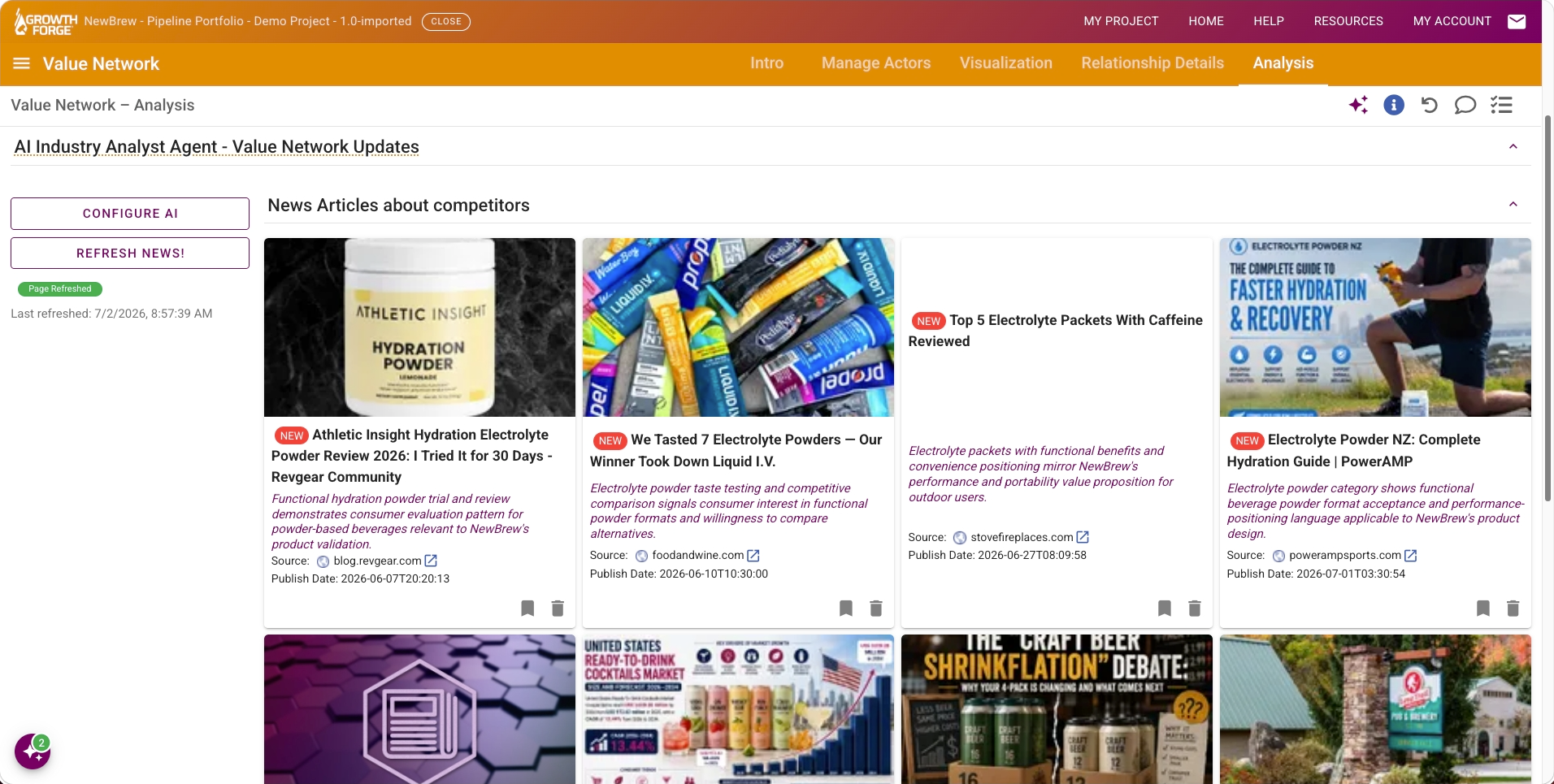
Yes, AI Discovery Assistants propose candidate actors with descriptions and links, and the AI Industry Analyst Agent surfaces relevant news and insights from your ecosystem for the team's consideration.
What does it connect to?
It feeds Jobs to Be Done (the end customer), Competitive Analysis (the competitor set), the Market Sizing Tool, and the external dependencies in your Implementation Approach; its actor and relationship evidence also contributes to your Strategy Evaluation.