BRI, LLC is a professional consulting service specializing in corporate innovation, new business growth, business and product strategy development. We help companies grow and innovate by sharing our decades of new business development experience through direct consulting, skills and best practices training courses, and software tools developed for the unique requirements of corporate innovation and growth organizations.


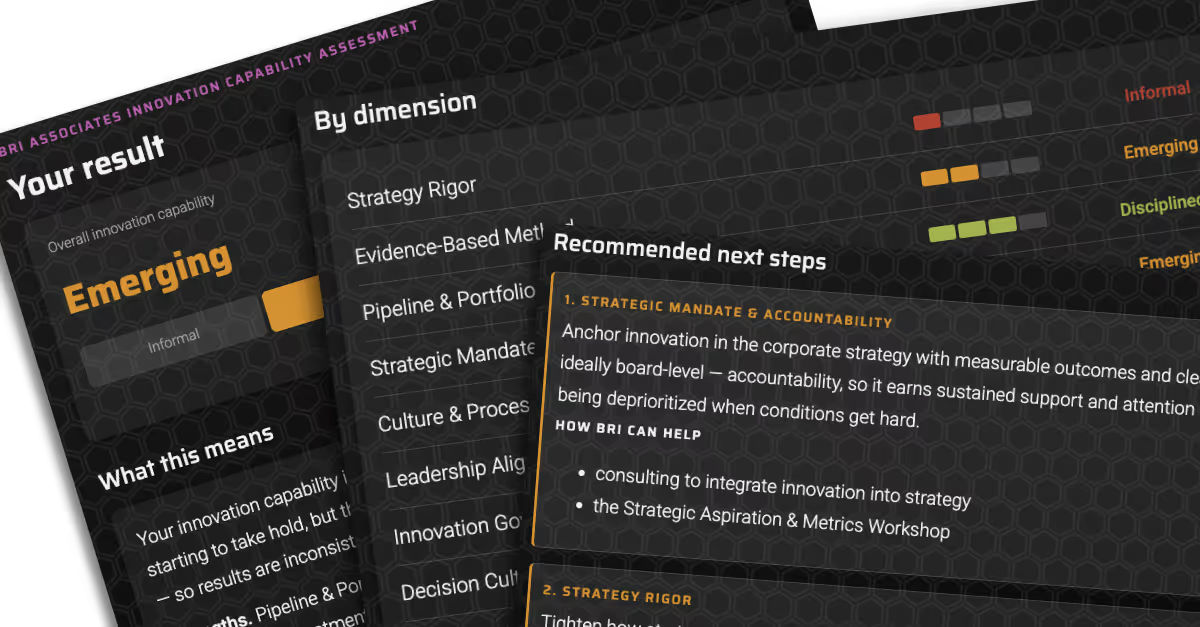
In about 5 minutes, it looks across the whole picture: how you do innovation (strategy, evidence, portfolio discipline) and the organizational conditions that decide whether it sticks (mandate, culture, leadership, governance, decision-making, and people).


A new venture usually starts from the product the team wants to build, while everything else customers need is assumed and each part of the solution gets built the way the core business always builds. Why the whole solution and the choice of how to deliver each part are strategy choices, where the usual tools leave gaps, and how to make both explicit before resources are committed.
When a mature company starts a new venture, the venture often takes the core business's place in the value network without anyone deciding it should, and inherits the customer layer, channels, competitors and sales model that come with that position. Why position is the upstream choice, how mapping the actors and their roles informs it, and why the competition follows from where the venture sits.
Many corporate innovation concepts start from a technology or an asset the company already has, and the problem gets attached afterward. Three ways the assumed need goes wrong, and the discovery work that establishes whether a real problem exists, where the value actually sits, and which aspects are genuinely underserved.