Unit Economics is the Growth Forge® Software tool for understanding the cost and margin behind your revenue. You layer per-unit cost assumptions over your market-sizing model to see gross margin by product, by sales model, and by market, so you know not just how big the opportunity is, but how profitable.
New-product or business project leaders and startup founders sizing margins, and finance-minded operators stress-testing profitability while preparing a full P&L.

What is Unit Economics in Growth Forge?
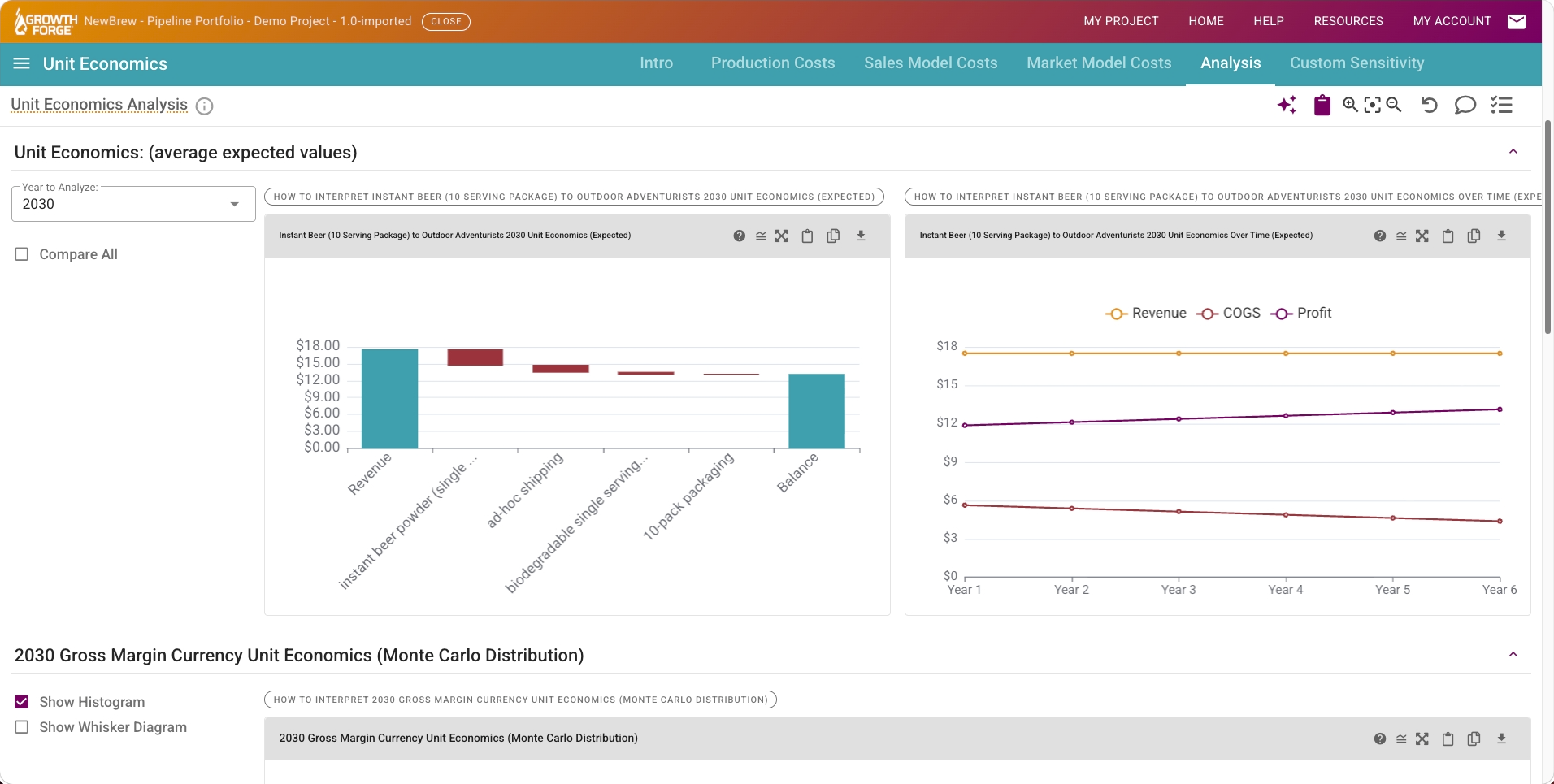
It's the tool for modeling per-unit cost and gross margin on top of your revenue forecast. Rather than a standalone cost sheet, it layers cost assumptions over your Market Sizing model, so you see profitability by product, sales model, and market, with the same uncertainty and analytics as the revenue side.
How do I model unit economics or gross margin for a new product or business?
Add per-unit costs for what you make, then layer in costs that vary by how you sell and which market you serve. Growth Forge expands those assumptions across your whole forecast and computes gross margin, so you can see where the business is actually profitable, not just where it's big.
Do I have to re-enter my revenue model?
No, Unit Economics builds directly on the Market Sizing Tool, so units, pricing, and volumes flow through automatically and your costs attach to the right drivers.
What if my costs vary by product, sales model, or market segment?
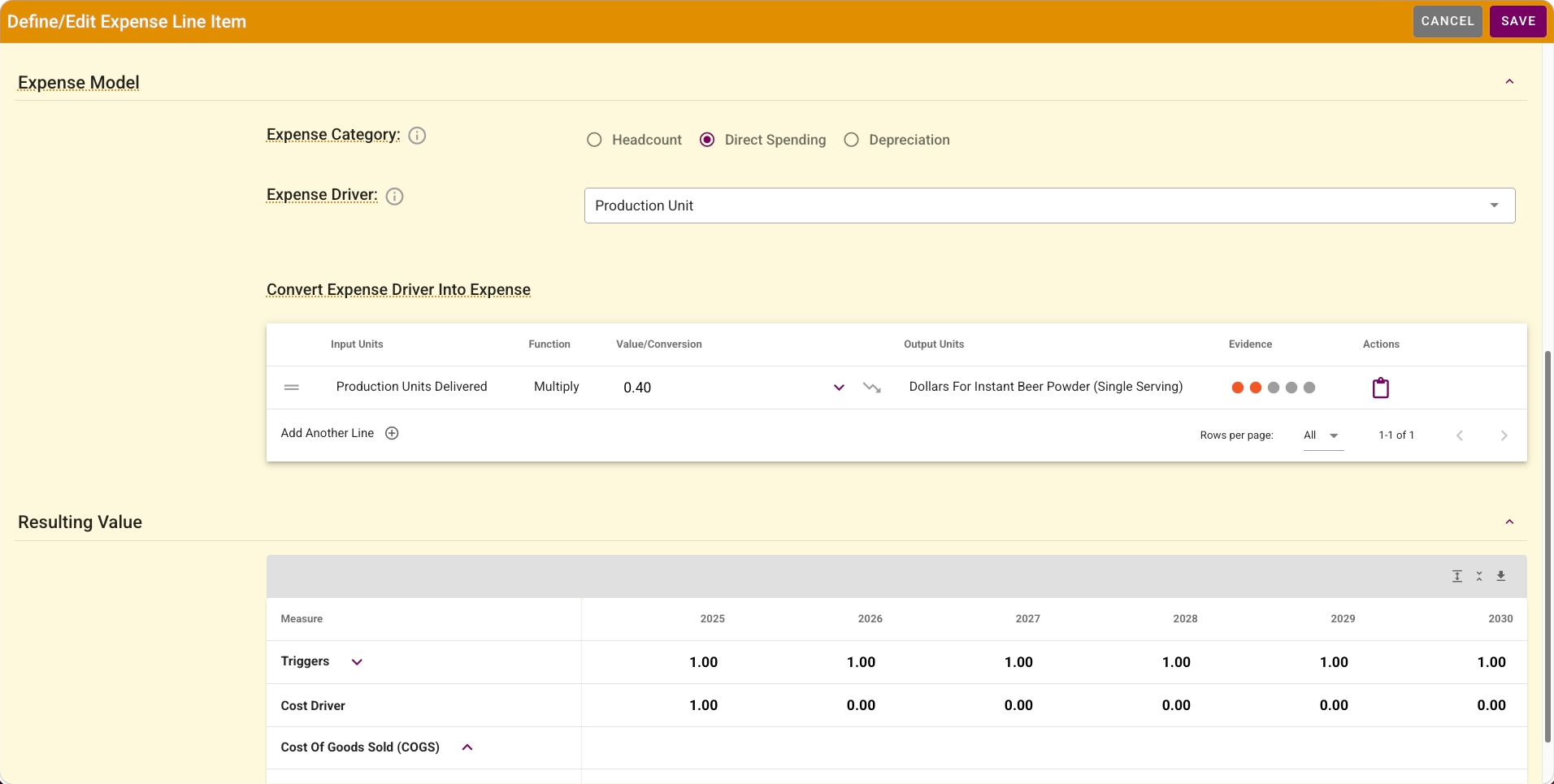
Costs can be driven by production unit, sales model, and market model, or by more sophisticated logic, and can include direct expenses, headcount expenses, and even capital depreciation, so the margin picture reflects how your costs really behave.
How do I know which costs matter most to margin?
Monte Carlo simulation shows the range of margin outcomes, and sensitivity analysis (including two-factor grids) ranks which cost drivers move margin most, so you focus on the assumptions worth validating.
What about operating expenses, and what does it connect to?
Operating expenses live in Expense Planning; Unit Economics covers cost of goods and gross margin. It draws on the Market Sizing Tool and feeds Expense Planning and your full P&L; its cost evidence also contributes to your Strategy Evaluation.