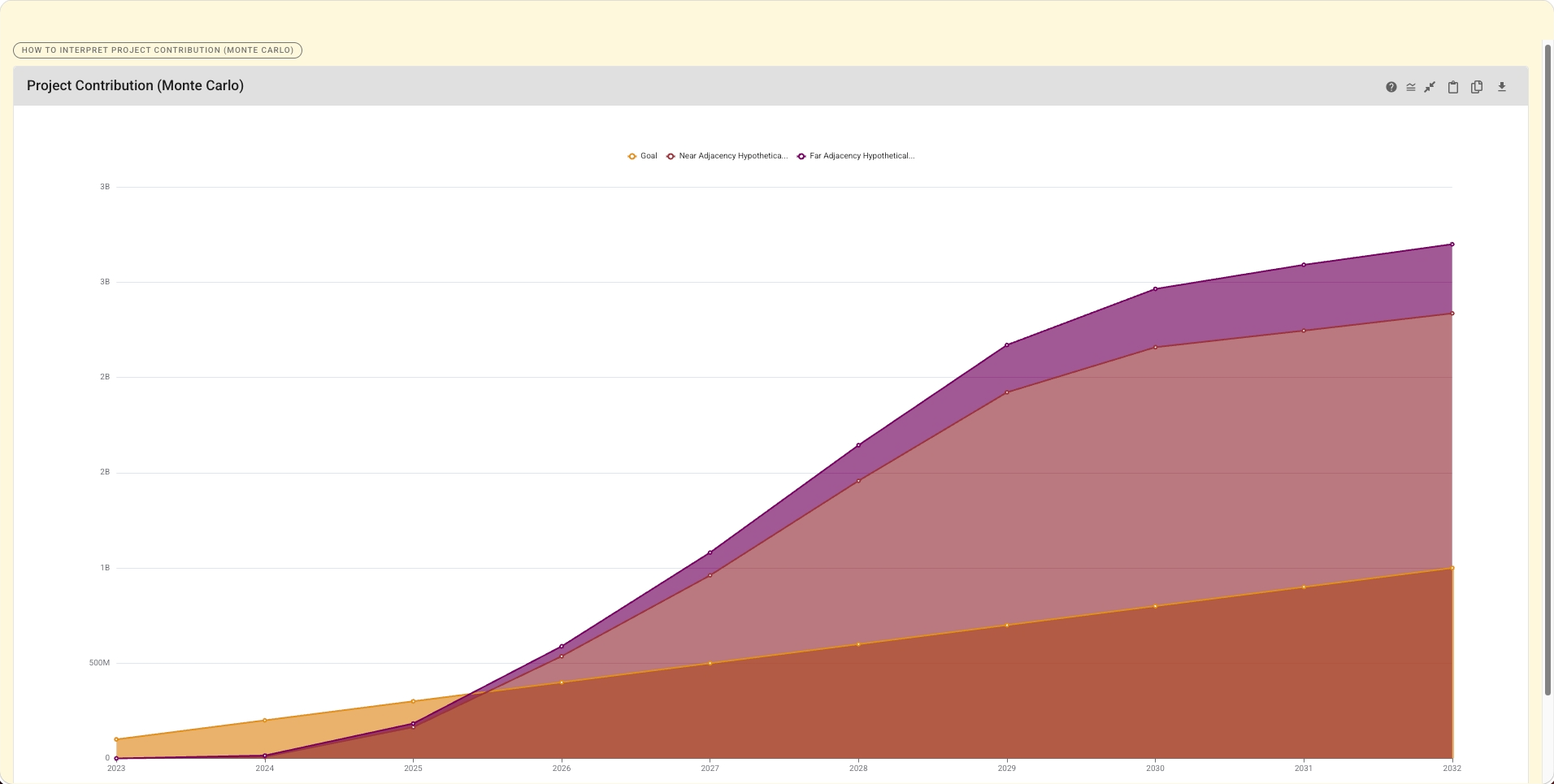
Portfolio Modeling is the Growth Forge® Software tool for forecasting a whole portfolio of innovation bets at once. You profile each project class as a staged cash-flow investment curve with uncertainty ranges, model the number and frequency of new project starts for each class, and run a single simulation that projects portfolio revenue, headcount, cash flow, survival rates, and how likely you are to hit your long-term portfolio goal, to set and manage expectations for either portfolio returns or required investment, depending on which is the constraint.
Portfolio managers and leaders responsible for a pipeline of bets who need to see the aggregate picture, test staging and mix decisions, and pressure-test a portfolio goal.
What is Portfolio Modeling in Growth Forge?
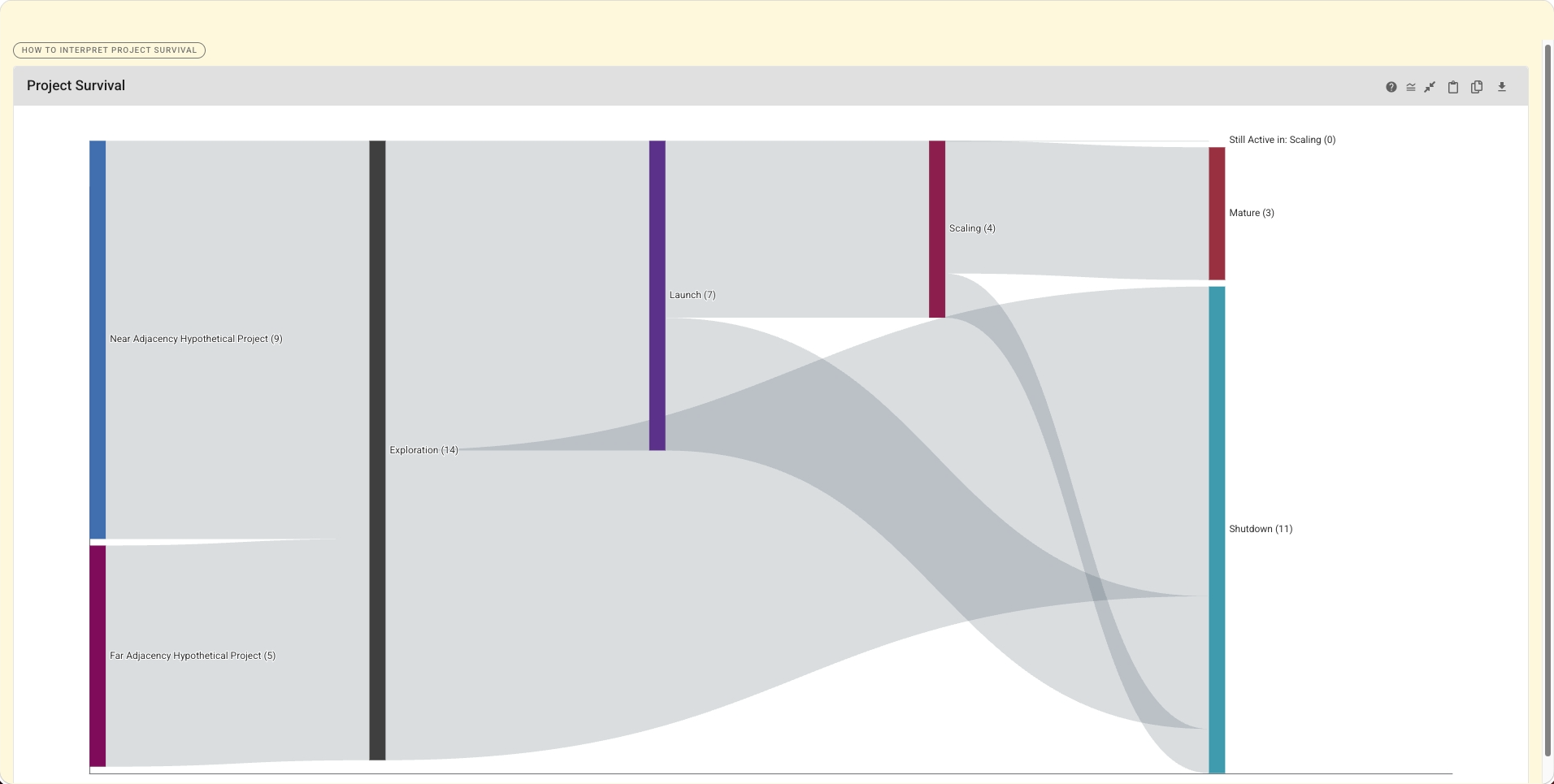
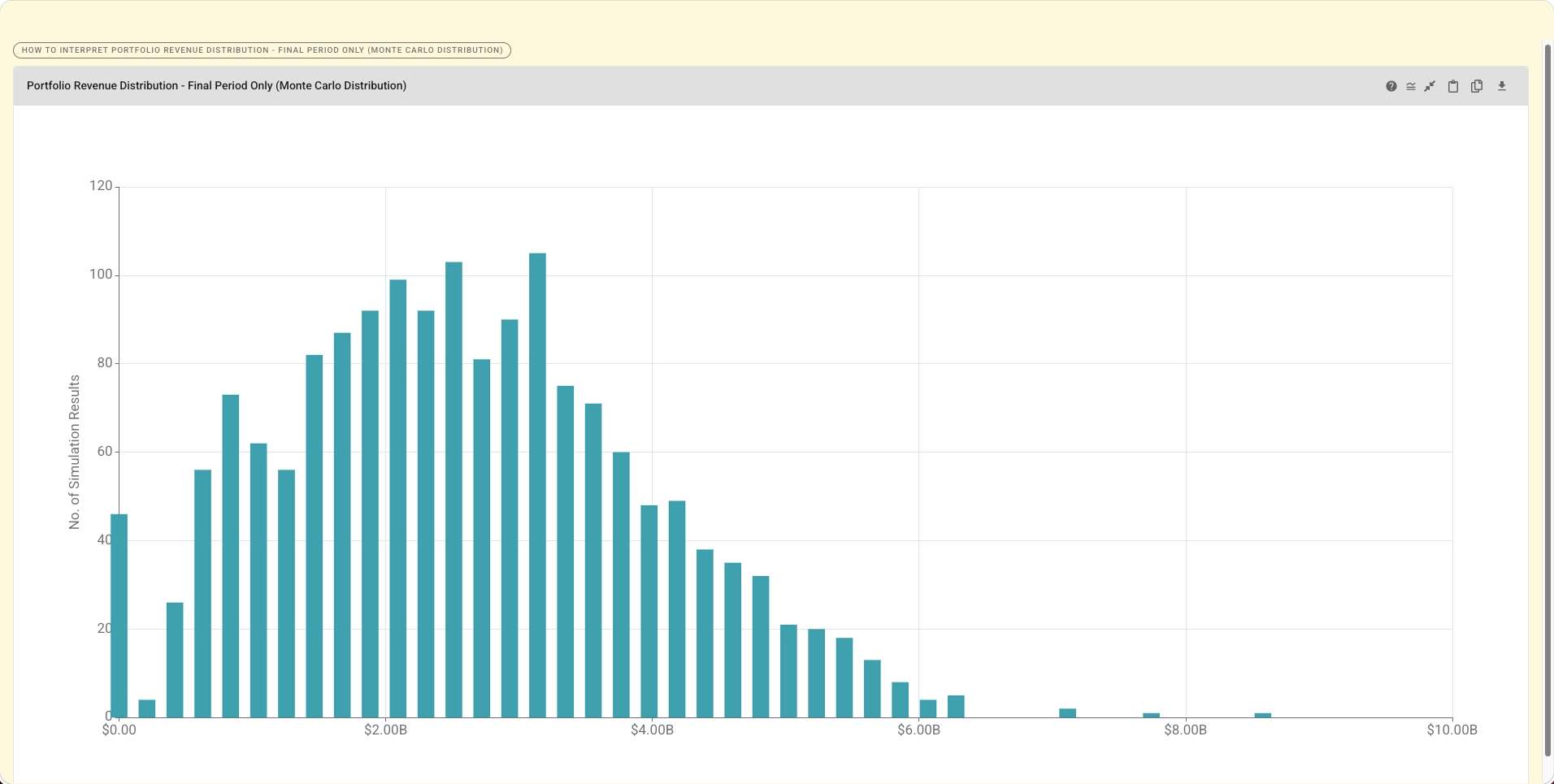
It's a portfolio-level tool that aggregates staged project-class curves into one Monte Carlo forecast of survival, investment, revenue, cash flow, and goal attainment. It sits above individual projects and answers the portfolio question: given a mix and cadence of bets, how likely are we to hit our goal, and what will it take?
How do I model or forecast an innovation portfolio and set investment guidelines?
Profile each project class as a staged growth curve with uncertainty, set how many of each class you start per period, and run the simulation. It projects portfolio survival, investment, and returns over time, so you can tune the mix and cadence to hit a returns goal or fit an investment constraint, and use the result to set investment guidelines by class and stage.
Does it pull live data from each project's model?
No, you profile project classes with a generalized, representative growth curve, since you're modeling potential future projects that aren't defined yet. You can include in-flight projects, but the main purpose is modeling future portfolio investment and results.
What can I test?
Annual project quantity and class mix; investment guidelines and ranges by class and stage; goal attainment; how many bets survive the pipeline; and the resources and investment needed to achieve the goal.
How many simulation runs should I use?
A thousand or more for stable confidence bands.
What does it connect to?
It's the portfolio-level companion to Strategy Evaluation and the project-level financial tools (Expense Planning, Market Sizing); it informs portfolio governance rather than feeding back into individual project models.