The Market Sizing Tool is the Growth Forge® Software tool for building a probabilistic revenue forecast for a new product or business. It connects what you sell and how you price it to the customer segments you're targeting, runs a market funnel from total market down to your expected share, and quantifies the uncertainty, so you can both judge whether the opportunity is big enough to invest in and pinpoint the highest-impact assumptions to validate next through evidence gathering.
New-product or business project leaders, intrapreneurs, and startup founders building the revenue case for a concept, plus portfolio managers comparing the upside of competing bets on consistent assumptions. Founders without a finance background get a credible forecast; portfolio managers get comparability across projects.
What is the Market Sizing Tool in Growth Forge?
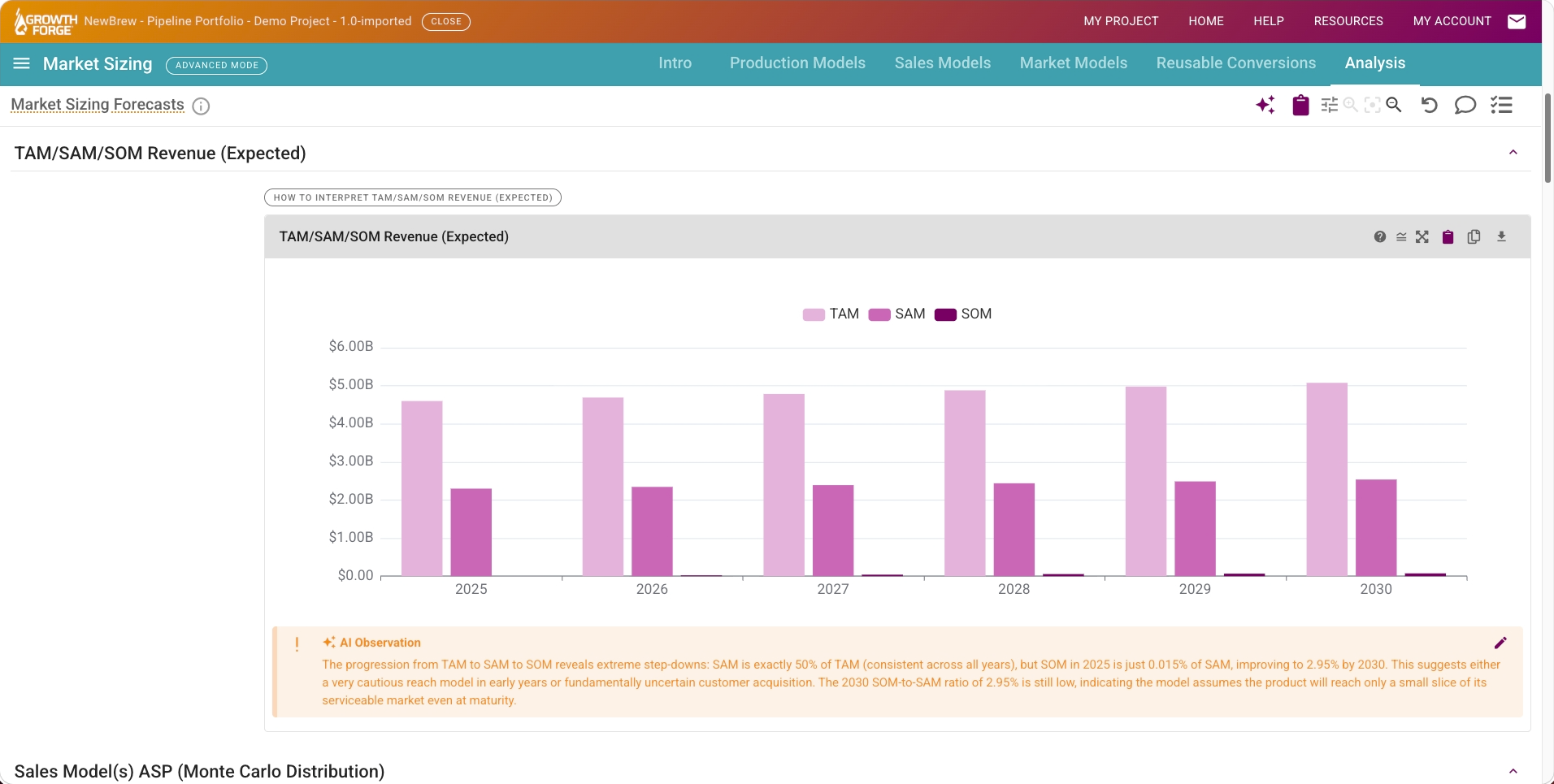
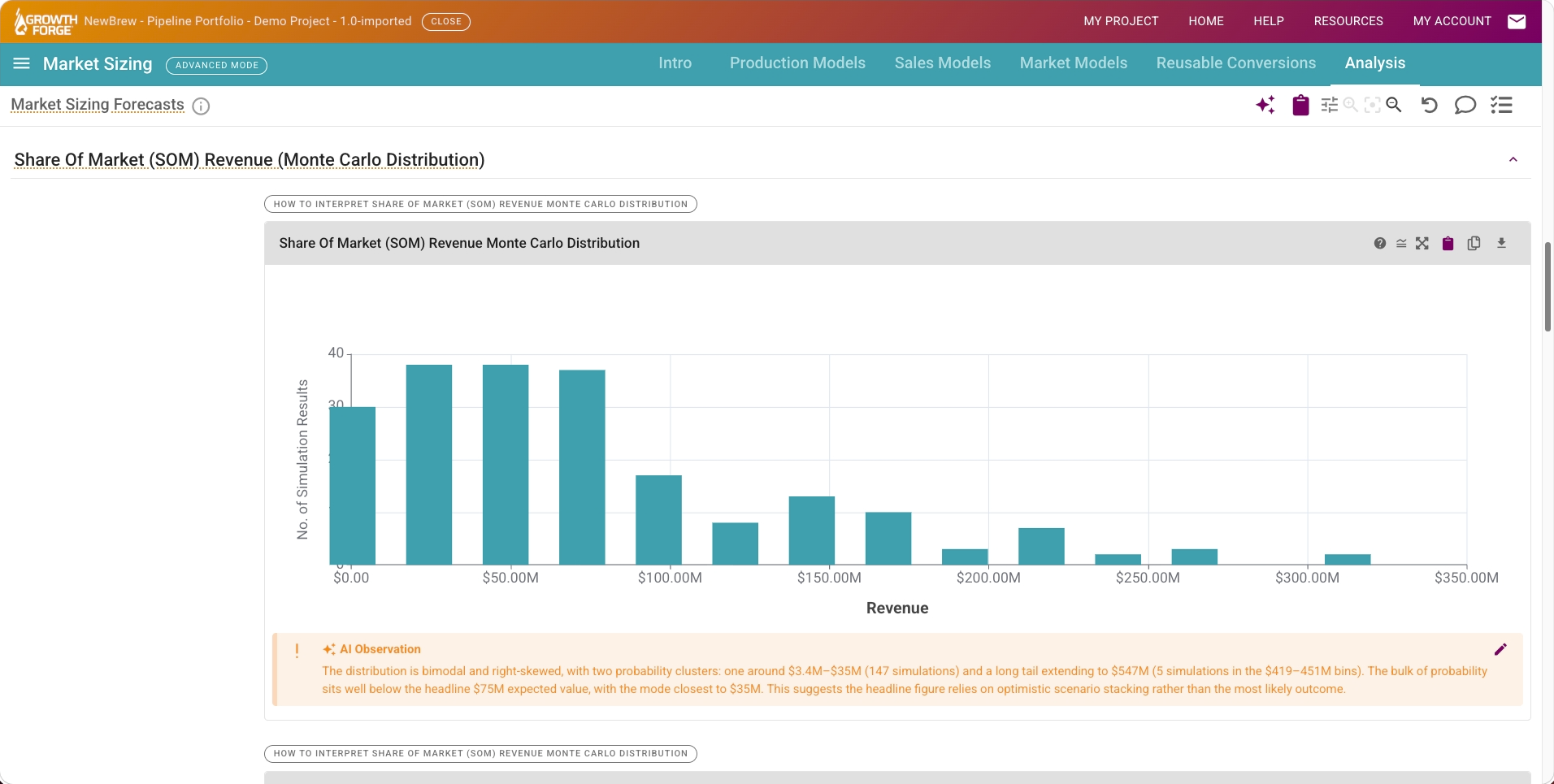
It's the tool for building a probabilistic revenue forecast for a new product or business. You connect what you sell and how you price it to your target segments, and it runs a market funnel, total market to serviceable market to your expected Share of Market, and layers Monte Carlo simulation on top so the result is a defensible range, not a single false-precision number. The forecast flows straight into your full P&L.
How do I size a market and forecast revenue for a brand-new product or business?
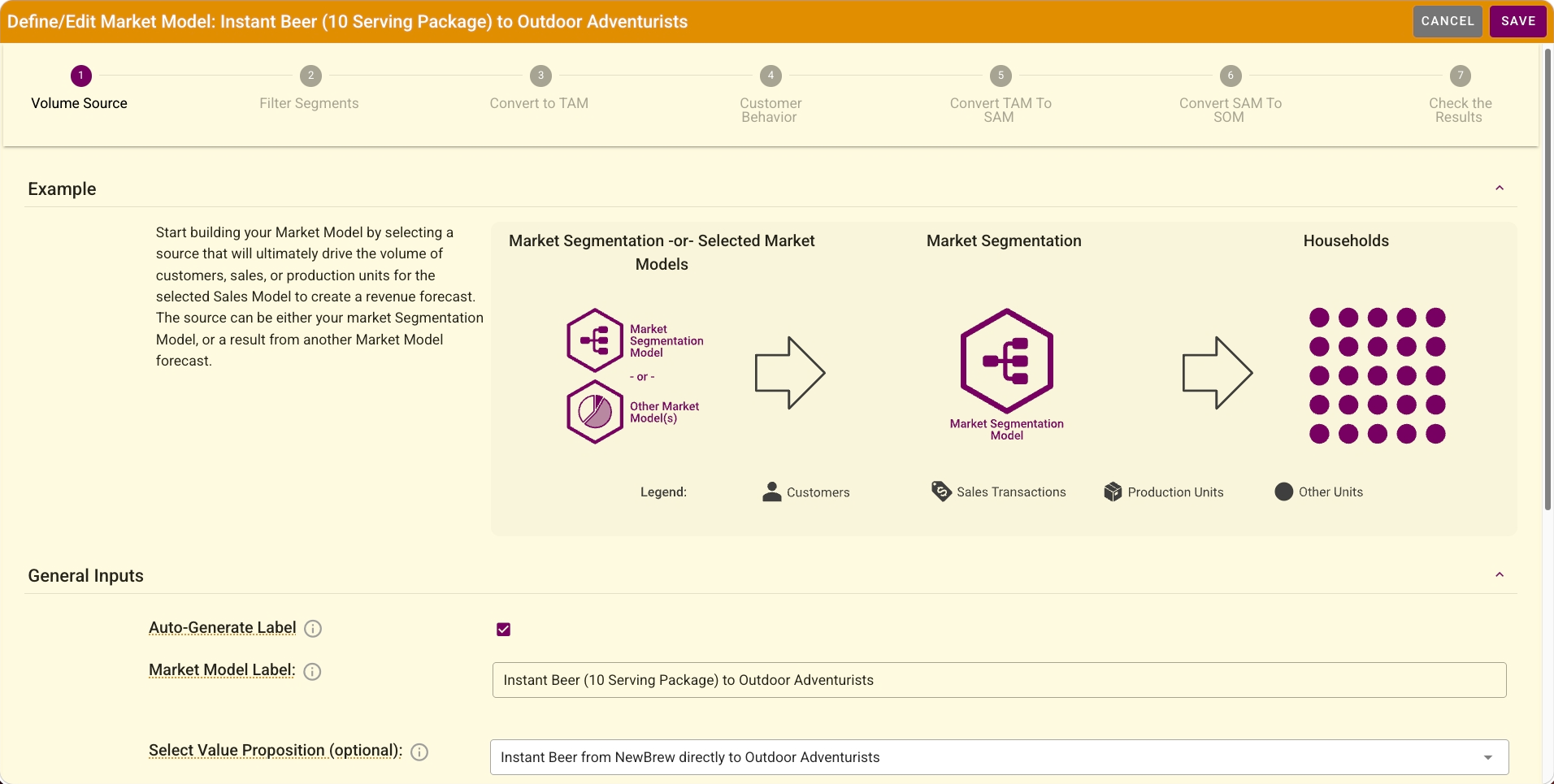
Define what you sell and how it's priced, bind it to the customer segments from Market Segmentation, then narrow from total market to the share you realistically expect to win. Because it's built for new, not-yet-proven opportunities, you work in assumption ranges rather than historical actuals, and the tool shows both the expected case and the full range of outcomes.
How can I forecast revenue when I have no sales history?
You enter each driver as a range (low / expected / high) instead of a single number, and Monte Carlo simulation combines them into a probability-weighted forecast. Built-in sensitivity analysis then ranks which assumptions move the forecast most, so you know exactly what to validate next.
Do I need a finance background or spreadsheet skills to use it?
No. Sales-model templates and a guided, step-by-step builder do the structural work; you supply the assumptions. It works a bit like guided tax software, think TurboTax for a new-business revenue model: it asks for the inputs it needs and handles the modeling behind the scenes. You can change product and sales models without writing or editing a single formula.
How is this different from building the model in a spreadsheet?
It's structured, reusable, and uncertainty-aware, with interactive analytics and charts built in, and it feeds your full P&L and discounted-cash-flow models directly. There are no fragile formulas or linked worksheets to maintain, and every assumption carries its evidence and range.
Can data be imported from or exported to spreadsheets?
Market Segmentation data can be imported from your own sources via a spreadsheet (template provided); all resulting analytic data and tables can be exported in CSV format; and visual charts can be copied directly to the clipboard for easy inclusion in presentations or other documents.
What does it connect to?
It draws segments from Market Segmentation and feeds Unit Economics and Expense Planning; it supersedes the Back-of-the-Envelope P&L once populated, and its assumptions contribute evidence to your Strategy Evaluation.