Expense Planning is the Growth Forge® Software tool for modeling operating expenses over time and turning them into a forecast you can fund. It produces an expense P&L, net income, and cumulative cash flow, plus time-to-market, profitability swing points, and the funding you'll need at the deepest point, so the financial picture is complete, not just the top line.
New-product or business project leaders and startup founders planning runway and modeling headcount and spend over time, and operators preparing for stage-gate and investment reviews.
What is Expense Planning in Growth Forge?
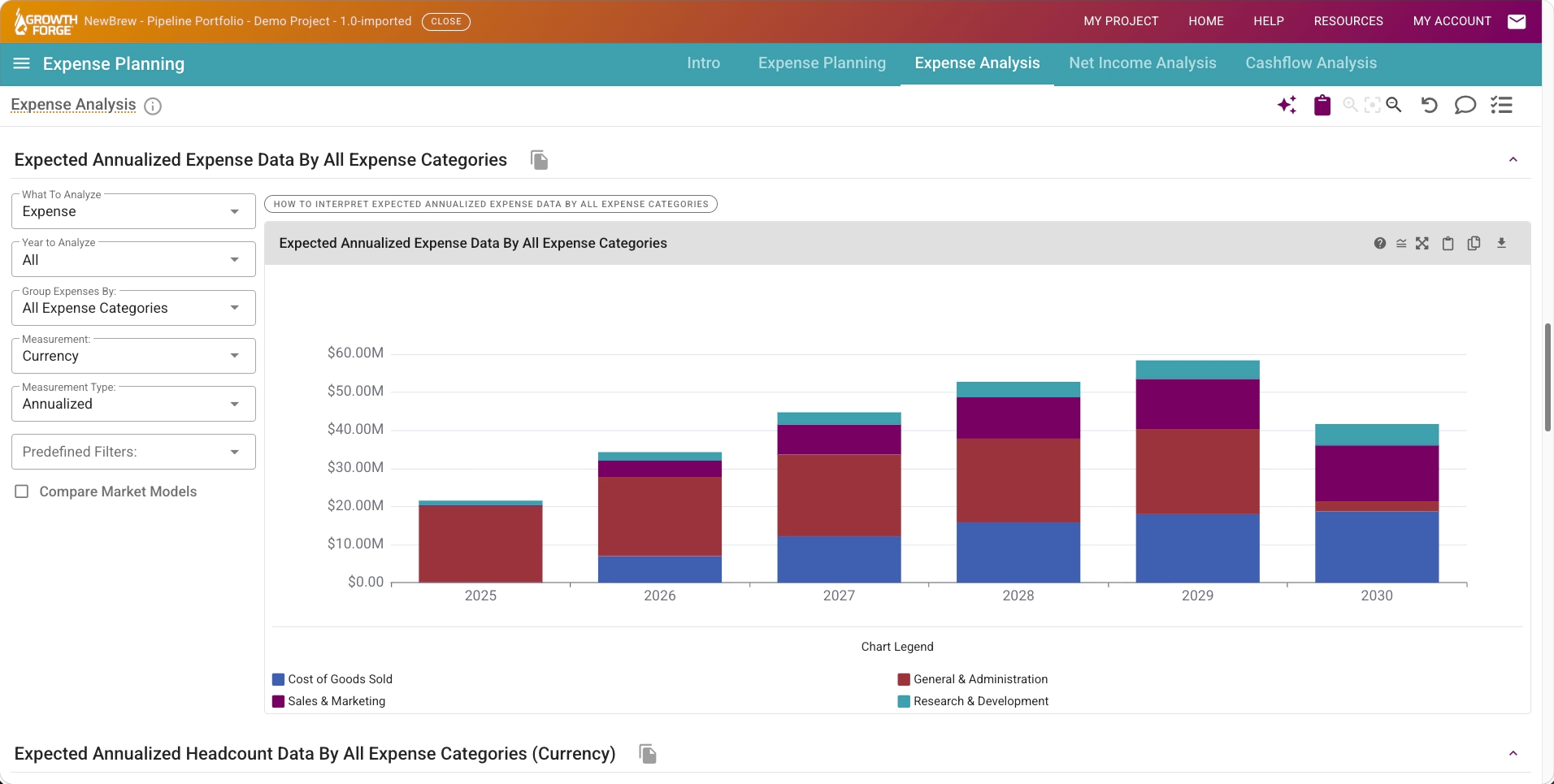
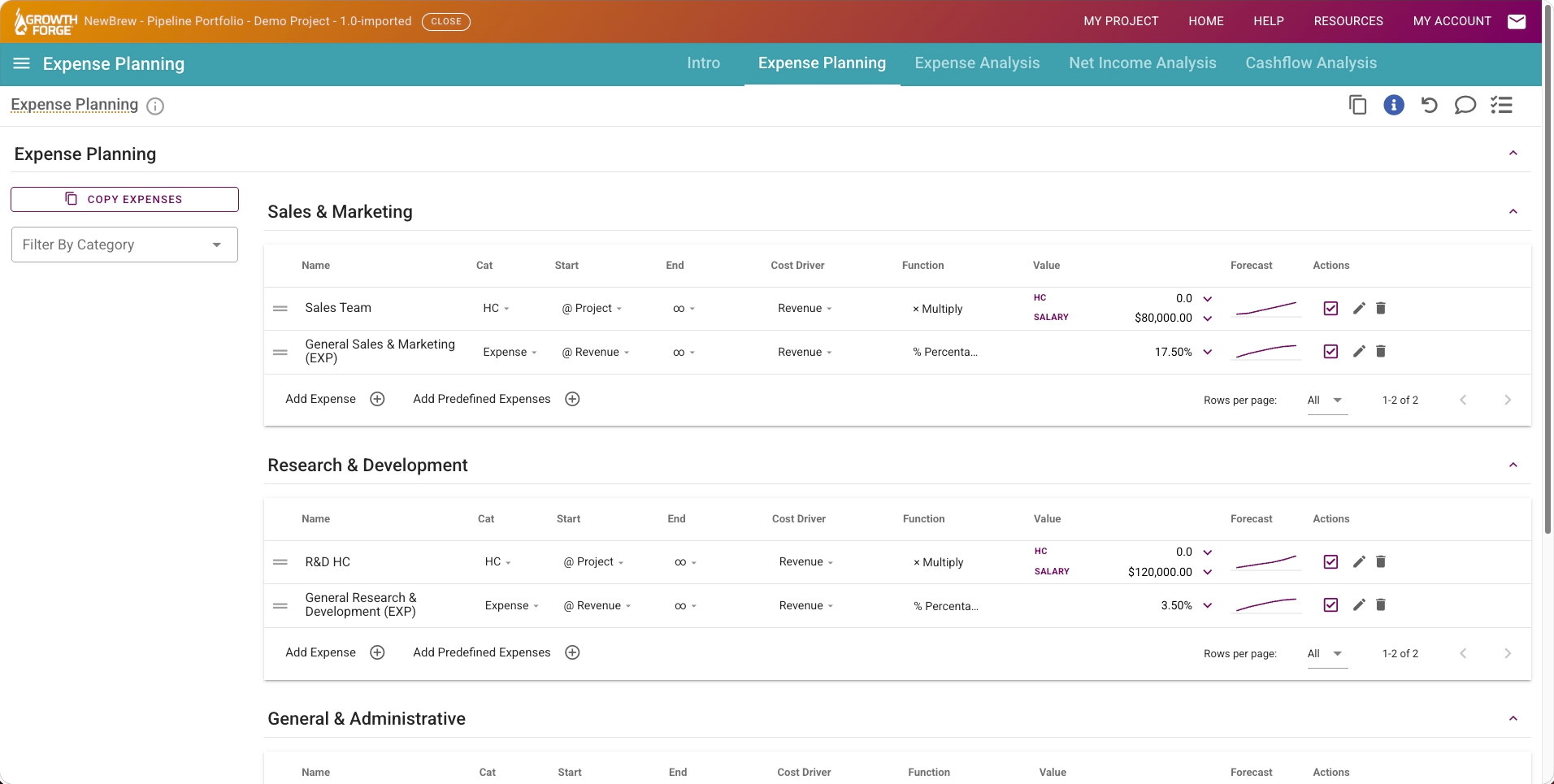
It's the tool for modeling operating expenses over time and turning them into a fundable forecast, an expense P&L, net income, and cumulative cash flow. Because expenses carry start/end triggers, the plan reflects when spend actually happens rather than a flat annual average.
How do I build a financial forecast, cash-flow plan, or runway for a new venture?
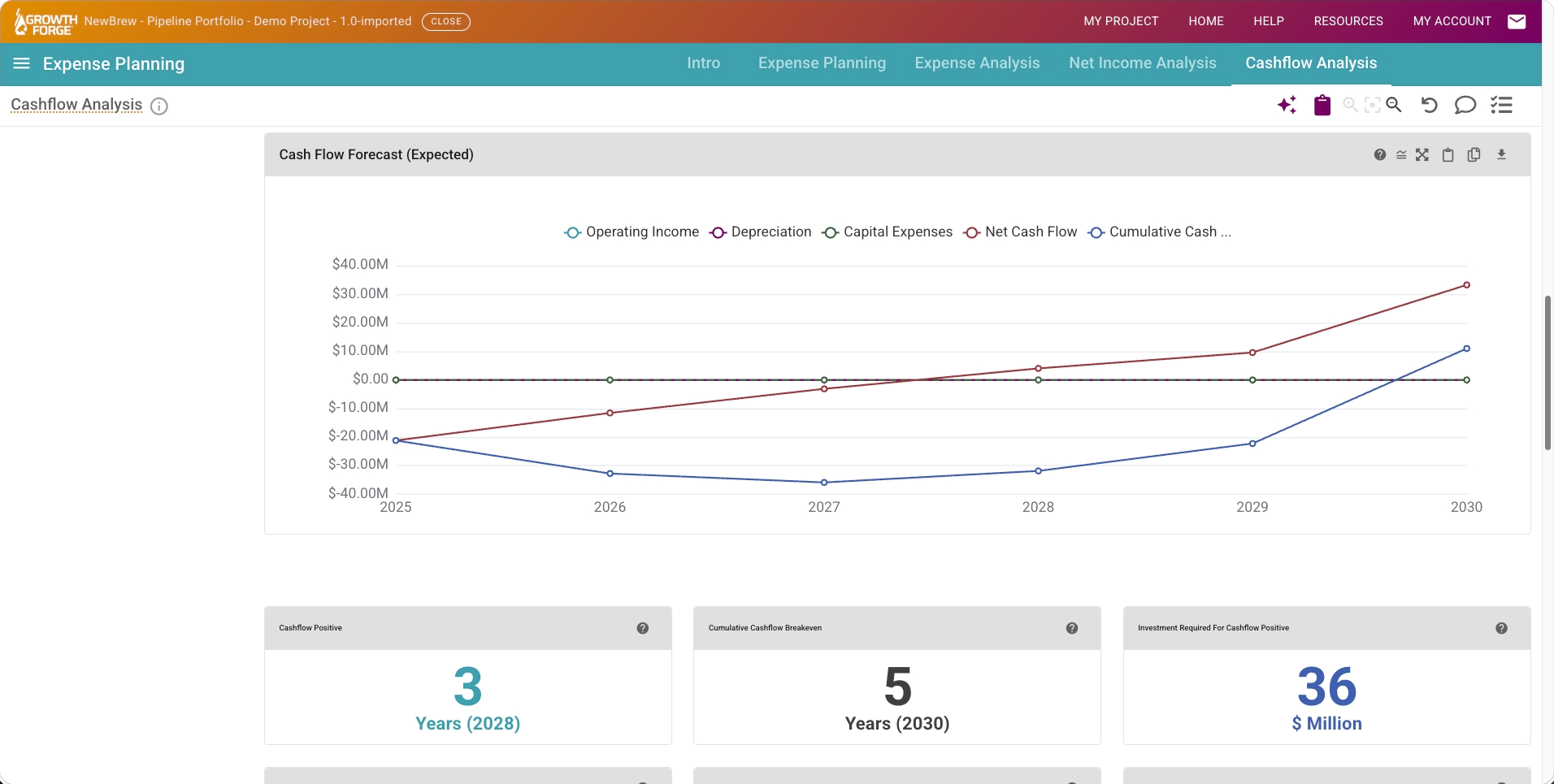
Add your operating expenses (from templates or your own), set when each one starts and ends, and Growth Forge produces the expense P&L, net income, and cumulative cash flow over time, with cost of goods flowing in from Unit Economics and revenue from the Market Sizing Tool. Monte Carlo shows the range, not a single line.
What is the funding requirement, and how much runway do I need?
The funding requirement is the deepest point of cumulative cash deficit, how much cash you need to reach self-funding. Expense Planning computes it directly from your forecast, along with the profitability swing points where the business turns.
When do I reach market and break even?
The tool detects time-to-market (when pre-revenue activity gives way to revenue) and the profitability swing points automatically, and shows them on a timeline, so the milestones aren't buried in the numbers.
How is this different from a spreadsheet financial model?
Expenses are driven by triggers and conditions over time, the forecast runs as a Monte Carlo range with discounted cash flow, and it stays connected to your revenue and cost models, so there are no brittle formulas to maintain and the whole P&L updates together.
What does it connect to?
It draws on the Market Sizing Tool and Unit Economics and informs stage-gate and portfolio decisions; its evidence contributes to your Strategy Evaluation.